Stomach cancer took the life of a Kaunas woman aged just 30: what her husband did is deeply moving
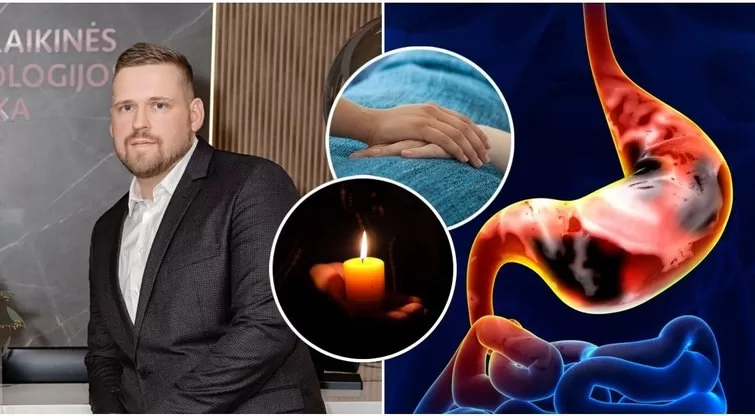
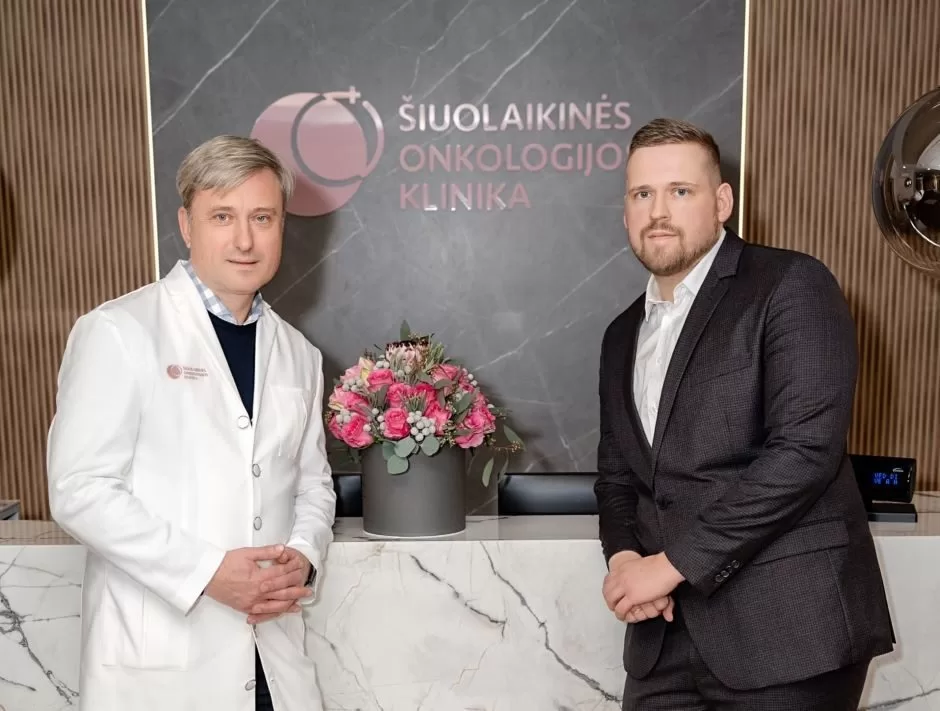
E. Žilinskas told the news portal tv3.lt that the idea of setting up a private clinic of this kind came to him long ago, when he himself came face to face with his wife’s illness. He says he knows only too well how much uncertainty arises when cancer is diagnosed and treated.
For this reason, the aim of the “Advanced Oncology Clinic”, which opened its doors in November with the slogan “Don’t give up”, is to give patients the opportunities that Egidijus found lacking when his first wife fell ill.
After the birth – news of cancer
The family learned that Kristina had cancer almost immediately after she gave birth. Egidijus says that his first wife’s pregnancy had gone smoothly and the baby was developing perfectly when labour unexpectedly began.
When they rushed to the hospital, the doctors could not explain why labour had started early. Once the baby’s lungs had been helped to mature, Dominykas was born by Caesarean section on 6 February, a month and a half earlier than expected (he had been due at the very end of March).
Their son was a little smaller, weighing just under two kilograms, but he was healthy and strong – he spent only a day in the incubator. “Now he’s a strong lad, 10 years old, 153 cm – a big, strong boy,” Egidijus smiles.
Dominykas grew stronger, but Kristina’s health kept getting worse; she simply could not recover, and her haemoglobin level dropped significantly. It was Egidijus who noticed the most alarming sign: while carrying the bedpan, he saw that his first wife’s stool was black.
“The doctors immediately recognised that it was blood. That same night they performed a gastroscopy and took a biopsy. A few weeks later the result came back: she had Stage III mixed-type malignant stomach cancer. Dominykas was born on 6 February, and on 5 March the doctors at the hospital removed her stomach,” recalls E. Žilinskas.
Her life ended at just 30
Kristina was 28 when she fell ill. Egidijus openly admits that there was a great deal of confusion and not knowing what steps to take or which straw to clutch at.
The huge queues to see doctors also got in the way, because when you have cancer, time, as Egidijus says, is both a gift and your greatest enemy. A gift because you can live, but an enemy because you have to hurry.
“We faced a lot of uncertainty and setbacks: we didn’t know where to turn or what to do. While she was being treated in Kaunas, there were many problems and a great deal of disorganisation, so we went to Klaipėda for treatment.
Doctors work according to protocol and offer only the free treatment available in Lithuania – and now that I look into it, it is a decade behind the European Union. We are the third-lowest country in the European Union in terms of access to reimbursed medicines.
The situation is very poor, and help was very hard to get, because the number of patients is high, there are few doctors and there is no comprehensive support,” Egidijus shared.
The disease wore down and destroyed her young body. With good medical care, Kristina lived for just under two years – she died at the age of 30.
After his wife’s death, E. Žilinskas stayed in touch with Alvydas Česas, the doctor who had treated Kristina, and it was over a drink before or after the theatre that the idea was born to set up the first private oncology clinic offering comprehensive support.
His current wife, Sandra, whom he describes as an angel sent from heaven, also played a big part in turning the idea into reality. She opened up the hearts of Egidijus and Dominykas, which had closed after their loss, and became an inseparable part of their family – now a family of four.
“Sandra runs everything, oversees everything and, as I say, connects emotionally with every single patient herself. You would be hard pressed to find someone with as much empathy as she has.
Every day she comes home and tells me how a life was saved because help was given in time, or, the next day, how they diagnosed something that doctors in another city had got wrong. She lives for this, she really wants to help people, and she is raising two sons, both as her own,” E. Žilinskas said warmly of his wife.

Comprehensive support matters when you fall ill
Egidijus is frank: without Sandra, the clinic might never have opened its doors at all, because she was the one who supported him every step of the way and never doubted for a minute that the idea had to become a reality.
The “Advanced Oncology Clinic” in Kaunas opened its doors at the end of November last year and, although it has not been operating for long, it is already being approached by a great many people seeking help with all kinds of questions surrounding cancer.
“Our main idea is to offer a wide range of support, because when you get cancer, it is not only chemotherapy that matters – you have to change your life radically, from A to Z: eat well, sleep, do breathing exercises and light exercise, because high-intensity sport is not allowed.
We have the very best specialists in their fields, but our wish is that a patient who comes to us has every possible option. The first thing is to avoid queues as much as possible. Now even we are starting to have waiting lists of a week or two, so we are inviting more and more doctors to join us.
The other side is for people to know what lies ahead of them – to know if there is a paid treatment that, although more expensive, is better, while they can always be treated free of charge. From my own experience, that is what I lacked – a specific treatment was given, but nobody was interested in whether there were any new developments, whether something new could be offered, or whether we could perhaps go somewhere else.
I believe a person should have the opportunity to choose the treatment they want – perhaps their parents will help, perhaps friends, perhaps they will need to borrow money or sell their car – but this opportunity must be given,” E. Žilinskas explained.
That is why he says he now has two key tasks: first, to do everything possible to make high-quality medicines available to cancer patients free of charge; and second, to reach an agreement that would allow the clinic to work with the Territorial Health Insurance Funds.
“What we are striving for is to be able to give people who cannot pay the same level of treatment as someone who can afford it,” he added.
He revealed how much chemotherapy costs
In addition, this is the first private clinic with a chemotherapy day unit, meaning that the specialists working at the clinic can administer chemotherapy infusions to patients:
“An interesting fact is that chemotherapy is often not even very expensive – a session can cost 100 or 200 euros. Yes, there are some very rare chemotherapies, for example those used with radiological treatment methods, which are really very expensive; we cannot offer or provide them at our clinic at the moment, but many others are really not expensive.
At the moment, the medicines for one session cost a few hundred euros on average. I keep asking: is that a lot when you have a serious illness? I don’t think so, and compared with how much we spend on looking good or eating well, this sum is negligible.”
The clinic employs not only specialists in cancer treatment, but also psychologists, psychotherapists and nutrition specialists.
“Doctors in Lithuania are of the highest calibre, but their workload is inhuman and the queues are out of control. Sometimes, when I hear how many patients our colleagues in the public sector see in a day, my jaw drops and my hair stands on end. You cannot provide high-quality care when you can only give a patient 10 or 15 minutes,” notes E. Žilinskas.
The clinic also runs a lecture series, the “Living with Cancer School”, covering a wide range of topics relevant to people with cancer. Egidijus is glad that those who attend not only learn useful information, but also get to know one another, and a community is forming.
“Community is very important. In Lithuania, there are still stereotypes that cancer is an illness to be hidden, not recorded in the e-health system, not mentioned to anyone – that you should sit in a corner and cry. People are frightened and afraid to tell their loved ones and friends, but in a community they talk to each other.
Perhaps, for one reason or another, their appearance is not what they would like it to be, so among like-minded people they can feel more at ease and talk about all kinds of sensitive issues,” said Egidijus.

He urges people not to be afraid to get checked
During our conversation, he shares more than one story of how timely help has given patients hope again, and notes that people often turn to doctors too late, when the disease is already advanced and has spread:
“As my colleagues say, cancer that is diagnosed and brought under control in time is easier to treat than diabetes; the most important thing is to diagnose the disease in time. Most often, a person comes in when the disease is already well advanced in its form or stage, and then it is much more difficult to help.
That is why I urge everyone to get checked and not to be afraid to see senior professors so that they can “give you a thorough going-over” and check everything – and then all these diseases really can be overcome.
Today there are many people who live full lives – they work, exercise, travel, raise children or grandchildren – something that a few decades ago probably seemed like an impossible scientific achievement, when people with malignant cancer died within a year or two. Everything has changed, but what matters most is diagnosis and catching the disease in time.”
Egidijus encourages people not only to get checked, but also, once diagnosed, not to be afraid to seek help and to talk about their experiences – the clinic is looking for people willing to share their stories, which could motivate others, encourage them to get checked and help them stay one step ahead.